
English| EUR
Suggested for you
More currencies
Choose a language
Rovaniemi's reindeer farms run on a daytime schedule, while the aurora keeps its own hours. This page sets out where the two overlap, what a Lapland reindeer feeding experience actually involves at the trough, and how local operators read aurora odds. It also flags the weeks when the sky stays simply too bright.
Quick answer
Around December and January, darkness falls before closing time and later arrivals occasionally catch aurora borealis over the paddock. The one caveat: cloud cover, not latitude, decides most nights this far inside the Arctic Circle.
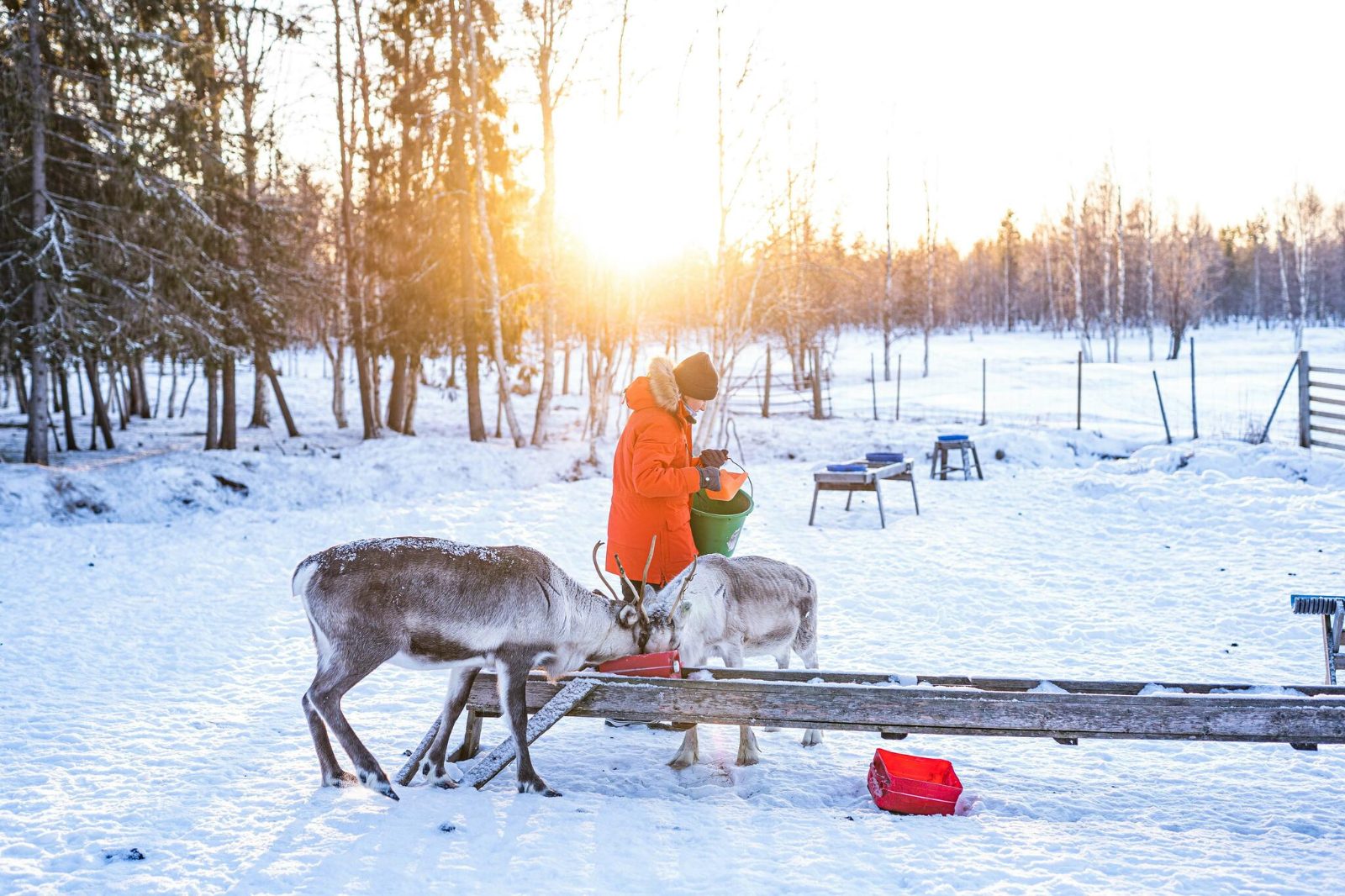
A reindeer's eyes change colour with the season. Research at University College London found that the tapetum lucidum behind the eye shifts from gold in summer to deep blue in winter, scattering more light inside the eye through the long Arctic dusk. Reindeer also see ultraviolet, which makes lichen and trail markings stand out against snow. Visitors who arrive asking about reindeer feeding and chance of northern lights are, in effect, asking about the same low-light season the animals evolved for. Two separate variables sit behind that question. Feeding is a staffed activity on a fixed daily schedule: handlers distribute lichen and pelleted feed, the herd is held in harness, and the sleigh runners stay on packed snow inside the farm. The aurora is geophysics. It requires darkness, a gap in the cloud, and solar activity strong enough to register on the Kp index. Rovaniemi sits on the Napapiiri line at the Arctic Circle, well inside the auroral oval, so the raw probability is high across the dark months. The limiting factor is almost never latitude. It is cloud. The overlap between the two is narrow but real. Near the winter solstice the sun clears the horizon for only a few hours, and the final stretch of the operating day can already be dark, which is why a porojen ruokinta ja revontulet itinerary works better in December and January than at either shoulder of the season. Anyone planning a Rovaniemi reindeer sleigh ride tour in early November or late March should expect daylight for the animals and a separate outing for the sky. The Finnish Meteorological Institute publishes a same-day aurora forecast, and experienced guides read it alongside the cloud map rather than the Kp number alone. The practical reading of all this is straightforward. Treat the herd as the fixed part of the plan and the sky as an upgrade that may not arrive. A visit built around feeding, antler questions and a ride through snow-covered forest holds up regardless of what the ionosphere does. The sections below cover the schedule, the arrival window, costs and directions in detail, so there is no need to guess at any of them.
“Treat the herd as the fixed part of the plan and the sky as an upgrade that may not arrive.”
The period between 10:00 and 15:00 provides the necessary daylight for reindeer feeding, while the period immediately following sunset offers the most frequent opportunities for Northern Lights viewing. Planning your visit within this arrival window balances interactive animal experiences with the dark skies required for solar activity.
Cold, -15°C to -5°C
High snow cover provides authentic conditions for sleigh rides and dark evenings for Aurora hunting.
Cool, -10°C to 0°C
Increased daylight hours allow for extended feeding sessions before dusk settles.
—
Arriving at 10:00 minimizes wait times and ensures sufficient time for feeding before the transition to evening sky observations.
Verdict: For the optimal balance of activity and visibility, arrive between 10:00 and 15:00 during the months of January or February.
The cost for reindeer feeding and sleigh ride activities is determined by the duration and type of package selected.
Cold-weather gear and an advance reservation matter more here than anything else you can arrange on the day.
Everything you need to know about reindeer feeding and chance of northern lights
Combining a sleigh ride with evening observation offers a high-latitude experience, though animal welfare and light conditions vary by season. This unique Arctic excursion provides the reindeer feeding and chance of northern lights within the same visit to the village. Visitors often enjoy the tranquil atmosphere of the herd while waiting for the aurora borealis to appear. By arriving during the recommended window, you balance daytime animal interaction with your nocturnal viewing goals.
While the reindeer remain at the village throughout the operating days, the best period for viewing the aurora is during the darker months of the winter season. We recommend planning your reindeer feeding and chance of northern lights experience during the months when the nights are long enough for high aurora activity. Always check current solar forecasts and local weather updates to maximize your potential for success.
Arctic conditions can change rapidly, and visibility for viewing the lights is dependent on cloud cover. In the event of extreme weather, the sleigh rides may be adjusted for the safety of the animals and guests. Staff members provide guidance on how to monitor conditions during your stay to ensure you have the best possible visit.