
4 hr
Sami Reindeer Sledding and Cultural Experience
Journey into Arctic tradition with reindeer sledding, feeding a 300-strong herd, and authentic Sami stories by the fire
Reserve
Hand-picked by our editors — only the best 5 experiences from 12 reviewed.
Verified partners for every tour, free cancellation where available, and instant confirmation on every booking.
4 hr
Journey into Arctic tradition with reindeer sledding, feeding a 300-strong herd, and authentic Sami stories by the fire
Reserve
4 hr
Hand-feed 300 reindeer at an authentic Arctic ranch, then enjoy Sami hospitality with fireside lunch and songs
Reserve
3 hr 30 min
Discover indigenous traditions, meet majestic reindeer, and enjoy sledding or feeding in an intimate Arctic setting
ReservePrices from verified partners. Availability updates in real time at checkout. Free cancellation policies apply where shown.
The landmarks, rooms, and views travelers on this tour remember — all visible on a single visit.
Experience the traditional Sami dwelling used for shelter and storytelling during the session. Visitors sit around a central fire while learning about nomadic history.
The reindeer experience offers a tranquil, educational encounter with indigenous heritage, whereas the husky tour provides a high-energy, physically demanding outdoor adventure. Choosing between these depends on whether you prioritize quiet cultural immersion or active engagement with Arctic sled dogs.
| Feature | Top pick Reindeer Sleigh Ride | Villmarkssenter Husky Sledding |
|---|---|---|
Pace of experience |
Slow and contemplative | Fast and energetic |
Interaction type |
Hand-feeding and storytelling | Active mushing and kennel care |
Cultural depth |
High focus on Sami traditions | Minimal cultural context |
Physical intensity |
Low (suitable for all) | High (requires physical exertion) |
Primary audience |
Families and culture seekers | Adventure enthusiasts and fitness focus |
| See tickets → |
Verdict: Select the reindeer feeding and sami culture with a chance of northern lights tickets if you seek a peaceful connection with local traditions, or book husky sledding if you prefer an active, adrenaline-filled day.
Choose your ticket, select your date, and reserve in under two minutes. Secure checkout handled by our verified partner.
Instant confirmation by email, with a mobile voucher you can save offline. No printing, no queuing at a collection desk.
Arrive at the entrance, show your voucher on your phone, and walk in. Most tickets include priority or skip-the-line access.
Practical details for your visit straight from our verified partners — hours, access, rules, and how to get there.
Tromsø, Norway
Standard departure point for tours
Regional lines connect Tromsø to nearby valleys.
Follow signs toward Krokelvdalen from central Tromsø.
Arctic conditions require thermal base layers, wool sweaters, and windproof outer layers. Sturdy, waterproof winter boots are necessary for navigating snowy terrain.
Only small backpacks are recommended due to limited space on transport and sleighs. All bags must be kept with you at all times during the Sami culture experience.
Photography is encouraged during reindeer feeding and sami culture with a chance of northern lights tours. Please remain respectful and avoid using flash near the animals.
The terrain in Krokelvdalen is uneven and natural, making it challenging for wheelchair users. Please contact the operator regarding specific mobility assistance needs.
Mobile phone signal can be intermittent in the valley. Ensure your device is fully charged, as cold temperatures deplete batteries quickly.
Families are welcome, though children should be dressed in multiple warm layers. Reindeer feeding and sami culture with a chance of northern lights tickets often include family-friendly educational segments.
Traditional Sami meals are included in many pre-booked packages. Guests are advised not to bring outside food unless required for specific dietary needs.
No pets are allowed at the camp to ensure the safety and comfort of the reindeer herds. Service animals must be cleared with the operator in advance.
Always follow the guide's instructions when approaching the animals. Reindeer feeding and sami culture with a chance of northern lights requires patience and quiet behavior.
Best time to go, insider tips, nearby landmarks, and the cancellation fine print — flip through to skim what matters to you.
How crowds, weather, and events shift across the year.
December to March provides the most consistent snow for reindeer sledding and high northern lights activity. Temperatures are cold, often dropping below -10°C.
September to October offers milder weather, though snow cover is less guaranteed. This is a quiet period before the winter rush.
August offers long daylight hours for reindeer feeding and sami culture with a chance of northern lights education. Perfect for those who prefer warmer temperatures.
April sees the return of more daylight while maintaining winter landscapes. Ideal for visitors who prefer shorter travel times and moderate cold.
Small details that turn a good visit into a great one.
Bring a portable power bank as the cold quickly drains smartphone batteries. Keep your phone inside a jacket pocket close to your body heat.
Wear two pairs of socks to keep feet warm during extended periods outdoors. Ensure boots have good grip for icy paths.
Never approach a reindeer from behind. Always wait for a guide to demonstrate proper feeding techniques for reindeer feeding and sami culture with a chance of northern lights tours.
Avoid cotton base layers as they trap moisture. Use synthetic or merino wool materials to stay dry and warm.
For a chance of northern lights photography, bring a tripod. Set your camera to manual focus and wide aperture for the best results.
Non-bookable sights within a short walk — free to visit, easy to pair.
Arctic aquarium showcasing local marine life
Flexible, no hidden fees.
Full refunds are provided for cancellations made within the specified operator window. As entrance is 0 NOK, financial terms apply only to pre-booked guided tour packages.
Hand-picked options within walking distance — pick a district for vibe, or a specific hotel for convenience.
Modern waterfront hotel in Tromsø
The Sami people have herded reindeer across the Scandinavian tundra for more than four thousand years, moving with the animals' seasonal migrations between coastal winter pastures and inland summer grazing grounds. By the 17th century, colonial taxation systems forced many Sami families into sedentary settlements, yet the cultural practice of reindeer husbandry persisted as both livelihood and identity marker. Today fewer than 10 percent of Norway's Sami population actively herd reindeer, but those who do maintain rights to vast swaths of high-country pasture under the 1987 Reindeer Husbandry Act, which recognizes indigenous land tenure within modern property law. In Krokelvdalen, 25 kilometers south of Tromsø city center along Sekundær Fylkesvei 53, small-scale operators offer reindeer feeding and Sami culture with a chance of northern lights through controlled encounters on private grazing land. The herds here are semi-domesticated: they roam freely during daylight hours but return to feeding enclosures at dusk, conditioned by generations of human contact. Visitors arrive during the optimal 10:00–13:00 window for daylight feeding sessions, though evening programs extending to 22:30 allow for aurora observation when solar activity permits. The geographic position at 69° north latitude places Krokelvdalen well inside the auroral oval, the ring-shaped zone where geomagnetic storms generate visible light displays. Clear winter nights between September and March yield northern lights roughly 60 percent of the time, though no operator can guarantee celestial weather. The lavvu, a conical tent of reindeer hide or canvas stretched over a birch-pole frame, serves as the architectural anchor for cultural programming. Inside, participants sit on reindeer pelts around a central fire while guides—many of them practicing herders—recount oral histories in a mix of North Sami and Norwegian. Joik, the Sami vocal tradition that predates written language, functions as both music and mnemonic device: each joik encodes the essence of a specific person, animal, or place through melodic contour rather than lyrics. The tradition was suppressed during Norway's Norwegianization policies of the 19th and early 20th centuries, when Sami-language instruction was banned in schools and cultural practices criminalized, but it has experienced a revival since the 1970s as part of broader indigenous rights movements. Modern reindeer feeding and Sami culture with a chance of northern lights tickets grant access to working ranches rather than museums. The animals you feed are part of active herds counted in annual roundups, their ear notches indicating family ownership under a system of customary law older than Norway itself. The guides who serve reindeer stew in the lavvu often split their year between tourism and traditional herding, following the herd to summer pastures when the snow melts and returning to fixed camps only when autumn frosts harden the ground again.
"Each joik encodes the essence of a specific person, animal, or place through melodic contour rather than lyrics."
A step-by-step walkthrough of the visit — what you'll see, how long each stage takes, and the details that matter.
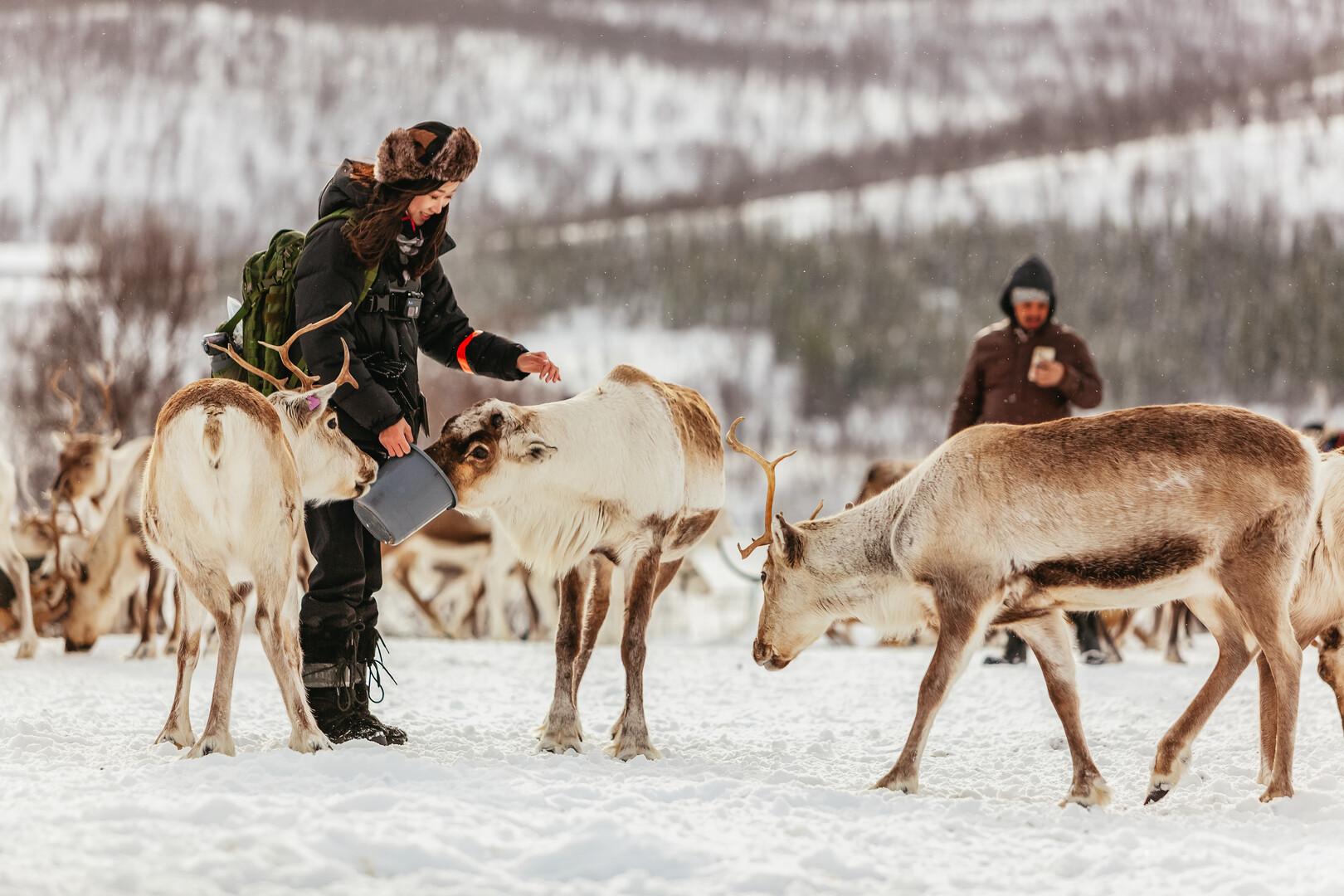
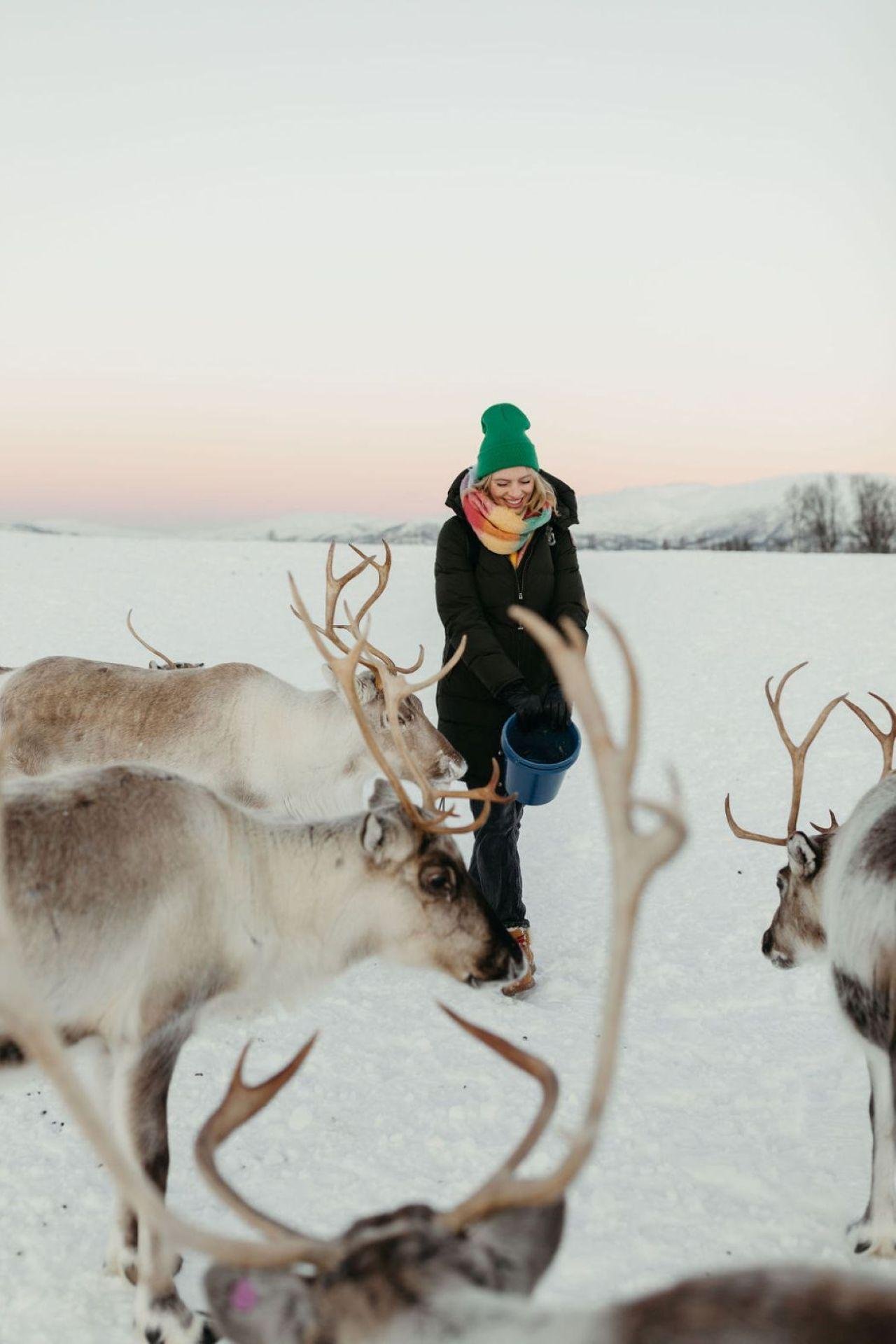
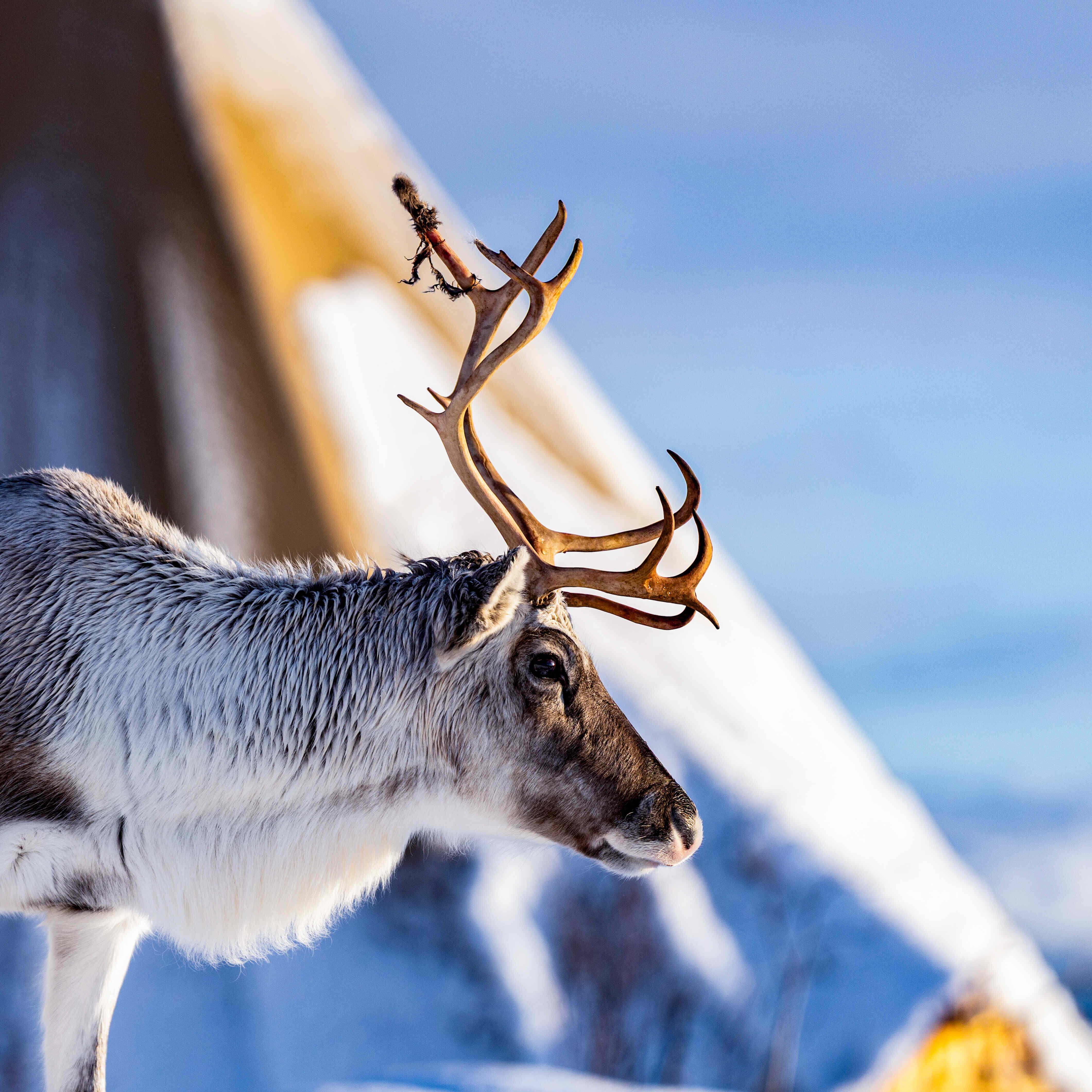
You arrive in Krokelvdalen as afternoon light slants low across the valley, the birch forest dark against snowfields. A guide in a gákti—the traditional Sami tunic with red and blue trim—meets you at the parking area and walks you 200 meters uphill to the feeding enclosure. The reindeer cluster near the gate, their breath visible in the cold air. You hold lichen and pelleted feed in your gloved palm, and a young bull steps forward, his velvet antlers still soft in early winter. He eats slowly, his movements calm and deliberate. After feeding, you follow the guide to a lavvu set back from the main enclosure. Inside, smoke from the central fire rises through an opening in the roof. You sit on thick reindeer pelts, the hide warm against your legs. The guide pours hot coffee and explains the ear-notching system: each family's mark is a legal signature, recognized in regional courts. She sings a short joik, her voice rising and falling in intervals you cannot quite predict. The melody has no beginning or end, only a shape that circles back on itself. Dinner is bidos, a stew of reindeer meat, potatoes, and root vegetables, served in wooden bowls. You eat slowly, listening to the fire crack. Around 21:00, the guide steps outside to check the sky. If the auroral forecast is favorable and cloud cover low, she will call you out to watch. You stand in the snow, head tilted back, waiting for the green curtain to unfold. Even if the lights do not come, the silence is absolute.
The site is open daily from 10:00–22:30. These hours apply consistently throughout the week.
No, the entrance fee is 0 NOK as access is strictly via pre-booked guided tours. All costs are bundled into your tour package.
The best arrival window is 10:00–13:00 to maximize daylight for feeding activities and scheduling before the evening programs.
Yes, children are welcome. Please ensure they are dressed warmly for the arctic conditions.
Yes, photography is permitted. We encourage capturing your experience, but please respect the animals by not using flash.
Dress in warm, layered clothing, including thermal base layers, a wool sweater, and a windproof jacket. Waterproof winter boots are essential.
The site features natural, uneven terrain which may not be suitable for all guests. Please contact the operator directly to discuss specific requirements.
The northern lights are a natural phenomenon and cannot be guaranteed. The experience still includes reindeer feeding and deep insights into Sami culture.
Tickets must be booked through the official site at https://www.tromsoarcticreindeer.com. Advance booking is required to secure your spot.